|
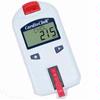
With the CardioChek instrument and the PTS PANELS Test
Strips, you now have an entire health management system in the palm of
your hand. The CardioChek is a hand-held medical diagnostics system that
monitors key health indicators, including total cholesterol, HDL cholesterol,
and triglycerides, plus blood glucose and ketones - all in the comfort
of your own home. The CardioChek blood testing device provides the tools
for meeting cholesterol screening and diabetes management guidelines.
Only PTS can provide this wide of a range of whole blood testing on a
portable, easy to use system, with clinically accurate results.
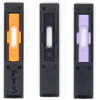
The system includes a meter instrument as well as test
strip. This easy-to-use blood test system displays the results of your
blood test in about one minute, with accurate results every time. The
CardioChek blood testing device features internal result storage for
quick easy review. Unlike other systems that only test ONE specific health
indicator - such as cholesterol or blood glucose, the CardioChek meter
allows you to test a range of key health indicators. And, because of
CardioChek's modular PTS PANELS technology, the device can never become
obsolete; it is designed to run new tests as they are developed.
The CardioChek PA gives you additional professional features,
such as the Lipid Panel, which allows one to perform several different
blood tests simultaneously, with only one drop of blood.
PTS Panels Test Strip Measuring Range
Total Cholesterol |
100-400 mg/dl |
Lipid Panel |
|
HDL Cholesterol |
25-85 mg/dl |
Total Cholesterol |
100-400 mg/dl |
Triglycerides |
50-500 mg/dl |
HDL Cholesterol |
25-85 mg/dl |
Glucose |
20-600 mg/dl |
Triglycerides |
50-500 mg/dl |
Ketone |
2-70 mg/dl |
|
|
Test all of these blood chemistries with just one instrument:
-
Glucose
-
Total Cholesterol
-
HDL (good) Cholesterol
-
Blood Ketone
-
Triglycerides
The CardioChek PA medical diagnostic testing system can
be classified as durable medical equipment (DME). Associated test strips
can be classified as disposable medical equipment. In general, when CardioChek
products are covered under major medical, they are considered DME. When
covered under pharmacy benefits, they are considered as drugs or disposables.
Metabolic Chemistry Panel
Metabolic Syndrome Chemistry -- Brand New!
- Estimated 47 million people with metabolic syndrome
- One in six Americans are at risk
Metabolic syndrome is a cluster of conditions that occur together, increasing your risk for heart disease, stroke and diabetes. Having just one of these conditions — increased blood pressure, elevated insulin levels, excess body fat around the waist or abnormal cholesterol levels — contributes to your risk of serious disease. In combination, your risk is even greater.
Introducing the Metabolic Chemistry Panel. This new test strip measures: HDL Cholesterol, Triglycerides and Glucose.
The American Heart Association and the National Heart, Lung, and Blood Institute recommend that the metabolic syndrome be identified as the presence of three or more of these components:
- Elevated waist circumference:
- Men — Equal to or greater than 40 inches (102 cm)
- Women — Equal to or greater than 35 inches (88 cm)
- Elevated triglycerides:
- Equal to or greater than 150 mg/dL
- Reduced HDL (“good”) cholesterol:
- Men — Less than 40 mg/dL
- Women — Less than 50 mg/dL
- Elevated blood pressure:
- Equal to or greater than 130/85 mm Hg
- Elevated fasting glucose:
- Equal to or greater than 100 mg/dL
DEVELOPMENT OF A METABOLIC SYNDROME PANEL TEST STRIP
The reason CardioChek decided to develop this product (Metabolic Syndrome Panel) was quite simple. They had a number of our customers asking: “Do you have a ‘Metabolic Syndrome Panel’ containing glucose, HDL cholesterol and triglycerides?” The most appropriate name was “Metabolic Syndrome Panel”.
There are a huge number of references for metabolic syndrome. Click here sampling of what CardioCheck found regarding Metabolic Syndrome.
PLEASE NOTE: Open, Used or Expired test strips are not returnable. If item is found to be defective by the manufacturer, the item may be exchanged or returned for a refund.
What CardioCheck found regarding Metabolic Syndrome.
I. Definitions of “Metabolic Syndrome Panel” published.
- National Heart, Lung, and Blood Institute, NIH, National Cholesterol Education Program
National Cholesterol Education Program, High Blood Cholesterol, ATP III Guidelines At-A-Glance, Quick Desk Reference, U.S. Department of Health and Human Services, Public Health Service, National Institutes of Health, National Heart, Lung, and Blood Institute, NIH Publication No. 01-3305, May 2001.
Clinical Identification of the Metabolic Syndrome - Any 3 of the Following:
Risk Factor |
Defining Level |
Abdominal obesity*
Men
Women |
Waist circumference**
>102 cm (>40 in)
>88 cm (>35 in) |
Triglycerides |
150 mg/dL
|
HDL cholesterol
Men
Women |
<40 mg/dl
<50 mg/dl |
blood pressure |
130/ 85 mmHg
|
Fasting glucose |
110 mg/dL
|
- World Health Organization
Avoiding heart attacks and strokes : don’t be a victim - protect yourself. World Health Organization. ISBN 92 4 154672 7 (NLM classification: WG 300), WHO Press, 2005, World Health Organization, 20 Avenue Appia, 1211 Geneva 27, Switzerland.
“When a person has central obesity (too much weight around the waist),
abnormal blood fat levels (e.g. high triglyceride level or low HDL cholesterol;
See section 11), high blood pressure and high blood sugar at the same time,
this is known as metabolic syndrome.”
- International Diabetes Federation (IDF)
International Diabetes Federation, Avenue Emile De Mot 19B-1000 Brussels, Belgium, IDF, April 14 2005
The IDF consensus worldwide definition of the metabolic syndrome
Part 1: Worldwide definition for use in clinical practice
Table 1: The new International Diabetes Federation (IDF) definition
According to the new IDF definition, for a person to be defined as having the metabolic syndrome they must have:
- Central obesity (defined as waist circumference > 94cm for Europid men and
> 80cm for Europid women, with ethnicity specific values for other groups)
plus any two of the following four factors:
- raised TG level: > 150 mg/dL (1.7 mmol/L), or specific treatment for this
lipid abnormality
- reduced HDL cholesterol: < 40 mg/dL (1.03 mmol/L*) in males and < 50
mg/dL (1.29 mmol/L*) in females, or specific treatment for this lipid abnormality
- raised blood pressure: systolic BP 3 130 or diastolic BP 3 85 mm Hg, or
treatment of previously diagnosed hypertension
- raised fasting plasma glucose (FPG) > 100 mg/dL (5.6 mmol/L), or previously diagnosed type 2 diabetes. If above 5.6 mmol/L or 100 mg/dL, OGTT is strongly recommended but is not necessary to define presence of the syndrome.
- American Heart Association
American Heart Association, Circulation. 2005;112:3066-3072.
“The incidence of cardiovascular disease (CVD), coronary heart disease (CHD), and type 2 diabetes mellitus (T2DM) has not been well defined in persons with the metabolic syndrome (at least 3 of the following: abdominal adiposity, low HDL cholesterol, high triglycerides, hypertension, and impaired fasting glucose).”
- American Medical Association
JAMA, the Metabolic Syndrome, Vol. 295 No. 7, February 15, 2006.
“Definition of the Metabolic Syndrome
- Abdominal (waist) circumference greater than 40 inches for men or 35 inches for women
- High blood pressure (hypertension)
- Hyperglycemia (fasting blood sugar more than 110 mg/dL)
- Elevated triglycerides (a type of fat in the bloodstream)
- Low levels of high-density lipoprotein, also known as HDL or ‘good cholesterol’ “
II. Use of the term “Metabolic Syndrome” in Medical Practice
- Cleveland Clinic Foundation, Cleveland, OH
The Cleveland Clinic Foundation uses the National Cholesterol Education Program definition of metabolic syndrome.
See http://www.clevelandclinic.org/heartcenter/pub/women/metabolic.htm.
“The National Cholesterol Education Program has defined five elements of the syndrome:
- an “enlarged waist” – defined as waist measurement of at least 35.2” for women, 40” for men
- high blood pressure - 130/85 or higher
- low levels of good (HDL) cholesterol - less than 50 mg/dl for women and less than 40 mg/dl for men
- elevated levels of blood fats (triglycerides) - 150 mg/dl or more
- insulin resistance - blood glucose (sugar) level is higher than normal, or a fasting blood glucose of 110 mg/dl or more.
An individual with three or more of these five characteristics has the metabolic syndrome.”
- The Mayo Clinic, Rochester, MN
Francisco Lopez-Jimenez, M.D., Cardiovascular Diseases, Mayo Clinic, Rochester, Minn., Medical Edge from Mayo Clinic, © 2006 TRIBUNE MEDIA SERVICES, INC.
Medical Edge Newspaper Column from Mayo Clinic:
METABOLIC SYNDROME: A PRECURSOR TO HEART DISEASE
DEAR MAYO CLINIC: I have been diagnosed with metabolic syndrome and
was told that it can affect my heart health as much as smoking two packs of
cigarettes a day can. What does metabolic syndrome have to do with heart
disease?
ANSWER: Metabolic syndrome is a cluster of conditions — high blood pressure,
excess fat around the waist (apple-shaped body), low levels of HDL cholesterol
(the “good” cholesterol), and high levels of blood sugar and the blood fat called
triglycerides — that occur together.
Cardiometabolic Program
The Cardiometabolic Program within the Cardiovascular Health Clinic at Mayo Clinic
in Rochester offers a unique, personalized treatment plan for people with metabolic
syndrome. Based on Mayo's highly successful cardiac rehabilitation program, we
combine diet and exercise prescriptions with a state-of-the-art facility, hands-on
experiences and a focus on behavioral change to maximize success.
Metabolic Syndrome
Metabolic syndrome is a long-recognized medical condition, but has been defined only
recently. A person is diagnosed with the syndrome when he or she has three of these
five disorders affecting metabolism:
- High blood pressure
- High blood sugar
- High triglycerides
- Low HDL ('good') cholesterol
- Abdominal obesity
While any of these factors is unhealthy, the net effect of having at least three of these
disorders is even worse, dramatically increasing the risk for cardiovascular disease and
diabetes. In fact, metabolic syndrome carries the same cardiovascular risk as smoking
two packs of cigarettes a day. The good news is that intervention and treatment in a
comprehensive program can decrease cardiovascular risk and prevent the onset of
diabetes.
- Johns Hopkins Hospital, Baltimore, MD
Johns Hopkins Hospital, Baltimore, MD, Johns Hopkins Health Alerts, Special Report, Diabetes and Metabolic Syndrome, 2007.
Special Report
Diabetes and Metabolic Syndrome
Most people have never heard of metabolic syndrome, a common condition in which insulin resistance plays a key role. |
|
For many years, physicians have recognized that elevated blood glucose levels, high blood pressure, obesity, and abnormal blood lipid levels tend to occur together in certain individuals. This cluster of symptoms—previously called “The Deadly Quartet,” syndrome X, or insulin resistance syndrome—is now commonly referred to as metabolic syndrome. Almost one in four American adults has metabolic syndrome, which increases the risk of diabetes, coronary heart disease, and stroke.
How Common Is Metabolic Syndrome?
In 2001, the National Cholesterol Education Program (sponsored by the National Heart, Lung, and Blood Institute) proposed the following criteria for the diagnosis of metabolic syndrome. A person needs to have at least three of the following five factors to be diagnosed with the condition:
- abdominal obesity (a waist circumference greater than 40 inches in men or 35 inches in women)
- triglyceride levels of 150 mg/dL or greater
- high density lipoprotein (HDL) cholesterol levels of less than 40 mg/dL in men or 50 mg/dL in women
- blood pressures of 130/85 mm Hg or higher, or taking antihypertensive medication
- fasting blood glucose levels of 110 mg/dL or greater
While only 7% of men and women age 20 to 29 meet this definition of metabolic syndrome, the percentage rises to more than 40% of those age 60 and older. Metabolic syndrome is more common in Mexican Americans (32%) than in whites (24%) or blacks (22%). |
|